California Registration Renewal is the process of renewing a vehicle’s registration with the California DMV before the current registration expires. This page explains how to renew vehicle registration in California, including the annual renewal process, renewal notice, registration expiration date, renewal fees, and the registration sticker or validation decal issued after successful renewal. It covers the main steps vehicle owners need to follow to keep a California vehicle registration current and avoid problems caused by an expired registration.
The page provides information about California vehicle registration renewal through online, mail, and in-person methods, along with details about renewal requirements and payment options. It explains how the DMV renewal notice works, what information it contains, how registration fees are calculated, and what happens after payment is submitted. Readers can also find information about the renewal date, DMV registration requirements, registration card, license plate sticker, late renewal, and vehicle registration status, helping them choose the right renewal method for their situation.
How to Renew Registration Online in California
California vehicle registration renewal can be completed online through the California DMV if the vehicle meets the online renewal requirements. The online registration renewal process requires the California License Plate number or CF number, the last five VIN or HIN digits, and valid payment information.
Steps for California Online Registration Renewal
The California DMV online services system makes renewal possible without visiting a DMV office. The process generally follows these steps:
- Open the official DMV renewal service.
The vehicle owner can use the California DMV Online Registration Renewal service to start the renewal.- https://www.dmv.ca.gov/wasapp/vrir/
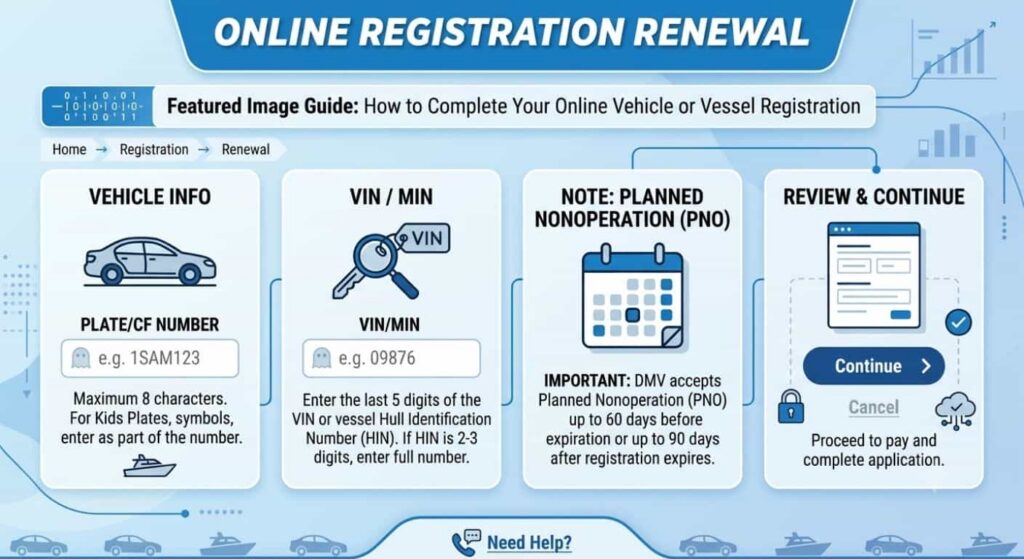
- Enter vehicle information.
The system asks for the vehicle’s license plate number or CF number. A vessel owner uses the applicable CF number. - Enter the VIN or HIN details.
The last five digits of the Vehicle Identification Number (VIN) are required for a vehicle. For a vessel, the system uses the last five HIN digits, with special rules for shorter HINs. - Review the renewal details.
The renewal notice can help confirm the vehicle information and renewal details before payment. If a smog certification is required, the DMV must have the needed electronic information before the renewal can be completed online. - Submit payment.
The owner enters valid payment information and pays the registration renewal amount shown by the DMV system. Available payment methods include a credit card, debit card, or checking account. - Keep the confirmation.
After payment, the owner should save the confirmation details. The DMV provides an online service to check vehicle registration renewal status if the updated registration has not arrived.
The online renewal option may be unavailable in some cases, such as missing VIN or HIN information, unresolved parking citations, or required insurance or smog information that is not on DMV records. In those cases, the vehicle owner may need to use another renewal method.
How to Renew California Vehicle Registration
Renewing your California vehicle registration can be completed quickly online, at a self-service DMV Kiosk, over the phone, or by mail. To ensure a seamless transaction and receive your new registration card and sticker on time, vehicle owners should follow these standard steps.
Review Your Renewal Notice
The California DMV mails a Vehicle Registration Renewal Notice approximately 60 days before your registration expires.
- Key Information Provided: Displays the exact expiration date, total fee breakdown, registered mailing address, and mandatory action items (such as a Smog Check requirement or unpaid parking tickets).
- Missing Notice? You can still renew using your current registration card and vehicle identifiers.
Clear Prerequisites
Before logging onto the DMV portal or visiting a kiosk, ensure your vehicle meets California’s compliance prerequisites:
- Electronic Insurance Verification: California requires active auto insurance. Your insurance provider must electronically report coverage details directly to the DMV system.
- Smog Certification: If your notice indicates a smog test is required, visit a STAR-certified or licensed smog station. The test results are sent electronically to the DMV. (Paper certificates alone will not clear online holds without the electronic system handoff).
- Address Updates: If you have moved, update your mailing address with the DMV at least 3 business days before completing registration renewal, so your sticker is mailed to the correct location.
Choose Your Renewal Method
| Renewal Method | Processing Time | Immediate Sticker? | Best For |
|---|---|---|---|
| DMV Online Portal | About 5–10 minutes online; registration materials typically arrive by mail within 2–3 weeks. | ❌ No (Digital confirmation is provided) | Routine renewals for vehicles with active insurance and no outstanding registration issues. |
| DMV Kiosk (SST) | Usually completed in 2–3 minutes. | 🟢 Yes (Registration card and sticker are printed immediately) | Drivers who need their registration sticker without waiting for mail delivery. |
| Phone Renewal | About 5 minutes; registration documents are mailed within 2–3 weeks. | ❌ No | Eligible vehicle owners renewing through the automated DMV phone system. |
| Mail-In Renewal | Approximately 3–4 weeks. | ❌ No | Renewals involving check or money order payments or additional supporting documents. |
Submit Details and Payment
When renewing online or at a DMV Kiosk, gather and enter the required information:
- Vehicle License Plate Number
- Last 5 Digits of the VIN (or HIN for watercraft/vessels)
- Payment Method: Credit card, debit card, or electronic e-check (Cash is accepted at select retail DMV Kiosks).
Registration Fee Breakdown
Total renewal costs vary based on the vehicle’s assessed market value (Vehicle License Fee / VLF), county transportation surcharges, weight fees (for trucks), and specialized EV Road Improvement fees.
Save Confirmation and Receive Sticker
- Digital Proof: Save, screenshot, or print your digital payment receipt. This receipt serves as temporary legal proof of payment if your current registration expires while waiting for the physical mail.
- Physical Sticker: For online and phone orders, your new official registration card and year tab sticker will arrive by mail within 14 to 21 business days.
When Is California Vehicle Registration Renewal Due?
A California vehicle registration renewal is due on the expiration date shown on the vehicle’s registration record. The California DMV states that registration expires at midnight on the assigned expiration date, so the renewal should be completed before that date to avoid late penalties.
How to Check the Registration Expiration Date
The registration expiration date is tied to the vehicle record, not just the month and year shown on the physical sticker. The registration card issued by the California DMV provides the vehicle’s current registration details and expiration information. A registration sticker or validation sticker placed on the license plate usually displays the month and year when the registration expires. Still, the sticker does not show the full renewal date. The exact due date is the specific day assigned to the vehicle’s registration record.
For example, a sticker showing July 2026 means the registration expires during July 2026. The complete expiration date may be listed on the registration card or in the DMV’s vehicle record.
When the Renewal Notice Arrives
The DMV generally sends a renewal notice before the registration expiration date. This notice can provide the vehicle’s renewal deadline, required fees, and other renewal details. A renewal notice may be sent by mail or through available DMV digital services. Still, not receiving the notice does not change the vehicle’s registration due date. The vehicle owner remains responsible for completing the California registration renewal on time.
For a smoother California registration renewal process, the vehicle owner should:
- Check the expiration date on the registration card.
- Review the renewal notice when it arrives.
- Renew before the listed due date.
- Keep the new registration card after renewal.
- Place the new validation sticker on the license plate when required.
Late renewal can lead to penalties and additional charges. Checking the expiration date early gives the vehicle owner time to complete renewal before the registration expires.
California Registration Renewal Fees
California registration renewal fees vary based on the vehicle, county, applicable charges, and any late penalties. The total California registration renewal cost may include the vehicle license fee, county fees, specialty plate fees, and other charges. The California Department of Motor Vehicles (DMV) provides a renewal fee calculator that helps vehicle owners estimate the amount due. The exact renewal fees depend on the vehicle record and charges that apply to the registration.
What Determines California Registration Renewal Fees?
Several factors can affect the final registration renewal amount. The renewal notice usually shows the amount due, while the DMV fee calculator can help estimate costs for eligible transactions.
Charges may include:
- Vehicle license fee: This fee is generally based on the vehicle’s value.
- County fees: Local charges may vary based on the county where the vehicle is registered.
- Specialty plate fees: Extra charges may apply to personalized or specialty license plates.
- Registration renewal fees: Standard charges required to keep vehicle registration current.
- Late penalties: Extra charges may apply when renewal is completed after the registration expiration date.
The registration renewal cost can vary from one vehicle to another. For example, the vehicle license fee is generally 0.65% of the vehicle’s purchase price or value. A Transportation Improvement Fee may range from $33 to $231, based on vehicle value. Other county and registration charges may apply.
California Registration Late Penalties
Late renewal can increase the total amount due. DMV penalties depend on how long the registration has been expired:
| Late Period | Registration Late Fee | CHP Late Fee | VLF/Weight Fee Penalty |
|---|---|---|---|
| 1–10 days | $10 | $10 | 10% |
| 11–30 days | $15 | $15 | 20% |
| 31 days–1 year | $30 | $30 | 60% |
| More than 1 year–2 years | $50 | $50 | 80% |
| More than 2 years | $100 | $100 | 160% |
Reg Fee: $10
CHP Fee: $10
VLF Penalty: 10%
Reg Fee: $15
CHP Fee: $15
VLF Penalty: 20%
Reg Fee: $30
CHP Fee: $30
VLF Penalty: 60%
Reg Fee: $50
CHP Fee: $50
VLF Penalty: 80%
Reg Fee: $100
CHP Fee: $100
VLF Penalty: 160%
These amounts apply to the listed late-fee categories and do not represent the full California registration renewal fees. The final payment can include other charges based on the vehicle and registration record.
California Registration Renewal Notice
A California registration renewal notice tells a vehicle owner that the registration renewal date is approaching and lists the fees due. The notice helps with California registration renewal, but the vehicle owner can still renew registration in many cases without receiving the DMV notice.
The California DMV generally sends a renewal notice before the vehicle’s registration expiration date. The notice may show the renewal date, registration information, fees due, and available renewal methods. It is sent to the registered address listed in DMV records, so keeping that address current helps prevent missed notices.
What to Do If the Renewal Notice Does Not Arrive
A missing DMV notice does not always stop the renewal process. A vehicle owner can check the registration status and available renewal options through the official California DMV website.
- California DMV Registration Renewal:
- https://www.dmv.ca.gov/portal/vehicle-registration/vehicle-registration-renewal/
If the notice does not arrive, the owner should:
- Check the vehicle’s registration expiration date.
- Confirm that the registered address is current with the DMV.
- Review the available online renewal options.
- Contact the DMV if registration information appears incorrect.
The renewal notice is useful for confirming the amount of fees due, but renewal can still be possible without the physical notice. A vehicle owner should complete the renewal before the registration expiration date to help prevent late fees or other registration issues.
How to Check California Registration Renewal Status
A vehicle owner can check California registration renewal status through the California DMV’s online vehicle registration status service. After a renewal request, the registration status may take some time to update, depending on how the renewal was submitted and processed.
Check the Renewal Status Online
The California DMV provides an online service for checking a vehicle’s current DMV status and vehicle registration record. The service can help confirm whether the renewal has been processed and whether the registration remains current.
- California DMV Vehicle Registration Status:
- https://www.dmv.ca.gov/portal/vehicle-registration/vehicle-registration-renewal/
The vehicle owner may need basic vehicle details to check the record. The exact information requested can depend on the DMV service being used. After submitting the required details, the result can show the current registration status and help confirm whether the renewal appears in the DMV record.
Registration Tag Renewal and License Plate Renewal
California registration tag renewal and license plate renewal usually refer to the same vehicle registration process. When a vehicle registration renewal is completed, the owner receives an updated registration sticker or validation decal showing the new expiration date. The term license plate renewal can be confusing. California does not normally require a separate yearly transaction just to renew a license plate; the plate stays with the vehicle, while the vehicle registration is renewed.
Registration Tag Renewal and Registration Sticker
People often search for registration tag renewal when they need to replace the sticker displayed on the vehicle’s license plate. The sticker serves as a visible registration tag and shows that the vehicle has a current registration period. During a regular renewal, the California Department of Motor Vehicles (DMV) issues a new registration sticker after the renewal is processed. The updated sticker should be placed on the rear license plate as directed by the DMV.
A vehicle owner may need registration renewal when:
- The current registration is approaching its expiration date.
- The vehicle’s registration has already expired.
- A new validation decal is needed after completing renewal.
- The registration sticker is damaged, lost, or unreadable.
The exact renewal options depend on the vehicle and registration record. Many eligible vehicles can be renewed online through the official California DMV website.
License Plate Renewal and Validation Decal
The phrase license plate renewal often appears in searches from vehicle owners who need to keep their plate legally current. In California, the renewal applies to the vehicle’s registration rather than creating a separate annual plate renewal. After successful registration renewal, the updated validation sticker or decal confirms the new registration expiration date. The license plate itself generally remains in place, so the owner does not need a new plate for every renewal.
Can Registration Be Renewed After the Expiration Date?
Yes, a vehicle registration can be renewed after the expiration date in California. An expired registration may lead to late renewal penalties, and the DMV does not provide a grace period for annual registration fees.
What Happens After Registration Expires?
A registration expiration date marks the deadline for paying annual vehicle registration fees. If the renewal payment is not completed by that date, the vehicle record becomes delinquent. The DMV may then add late penalties and delinquent fees based on how long the renewal remains unpaid.
A late renewal does not always mean the vehicle must go through the entire registration process again. In many cases, the registered owner can still renew registration in California by completing the renewal through an available DMV service. The exact amount owed depends on the vehicle record and the time since the expiration date.
For a late renewal, the registered owner should:
- Check the vehicle’s current registration status.
- Review the renewal notice or DMV record for the amount due.
- Pay the registration fees and any applicable late penalties.
- Keep proof of payment until the updated registration is received.
If the vehicle has been driven with an expired registration, separate issues may apply. The California Department of Motor Vehicles states that there is no grace period for paying annual vehicle registration fees. Penalties can apply after the expiration date.
Frequently Asked Questions
California vehicle registration renewal can usually be completed online, by mail, by phone in eligible cases, or through other DMV services. The correct renewal method depends on the vehicle’s eligibility and registration status. The California DMV provides the official renewal process, fee information, and status services. Renewal fees can vary based on the vehicle and location.
How do I renew my California vehicle registration?
A vehicle owner can complete California vehicle registration renewal through the California DMV online service, by mail, by phone for eligible transactions, or at a DMV office. Online renewal is often the quickest option when the vehicle qualifies for the service. The owner generally needs the license plate number, the last five digits of the VIN, and payment information. The official California DMV registration renewal service provides the current renewal options and requirements. After payment, the DMV processes the renewal and issues updated registration documents and a validation sticker.
Can I renew my California registration online?
Yes, eligible vehicle owners can complete online registration renewal through the California DMV website. The online service allows a renewal payment to be submitted without visiting a DMV office in many cases. The vehicle owner may need the license plate number, the last five digits of the VIN, and valid payment information. Some vehicles may require additional requirements, such as a completed smog certification on DMV records. The official DMV online renewal service shows whether the vehicle qualifies for online renewal.
What do I need to renew my registration online?
For online California registration renewal, the vehicle owner generally needs the license plate number, the last five digits of the vehicle identification number, and payment information. The DMV may already have required smog certification or insurance information on file, depending on the vehicle and renewal requirements. The renewal notice can provide useful information, but it may not always be required for an online transaction. If the vehicle has registration holds or other issues, the online service may not process the renewal. The California DMV renewal service provides the current requirements.
What is registration tag renewal in California?
Registration tag renewal refers to the process of renewing a vehicle’s California registration and receiving the updated registration sticker or validation decal. The sticker shows the current registration period and is placed on the vehicle’s rear license plate as required by California DMV rules. The registration renewal itself confirms that the vehicle remains registered for the new period. The tag does not replace the registration record held by the DMV. After a successful renewal, the vehicle owner should check the new registration documents and sticker for accurate information.
Is license plate renewal the same as registration renewal?
License plate renewal is often used to describe the same annual process as registration renewal, but the two terms can refer to different parts of the transaction. California vehicle registration renewal keeps the vehicle legally registered, while the license plate remains assigned to the vehicle in most cases. A renewed registration may result in a new validation sticker rather than a new physical plate. Special, personalized, or other plate types may have separate fees. The California DMV provides current information about registration and plate-related charges.